
Man overboard! What to do in the first seconds
3 min read
A person falling overboard is one of the most serious emergencies at sea. A head in the waves can be lost from sight within seconds, and cold water quickly saps the strength of the person in it. That’s why everyone on board, not just the skipper, must know the procedure – and practise it before it’s ever needed.
This guide is a teaching summary and does not replace practical training. The exact procedure depends on the boat, the crew and the conditions; the skipper should brief the crew on it when they come aboard.
The first seconds
- Shout “Man overboard!” and the side: “Man overboard to starboard!”. The whole crew must know immediately.
- Throw the lifebuoy at once, and anything that floats, as close to the person as possible. It gives them something to hold on to and marks the spot.
- Appoint a spotter whose only job is to watch the person and keep pointing at them with an outstretched arm. Never lose sight of them.
- Press the MOB button on the GPS or chartplotter to mark the position.
Getting back to the person
The skipper chooses the manoeuvre depending on the boat, the wind and the crew. The best known are the quick stop (immediate tack) and the figure-of-eight. Whatever the method:
- if you start the engine, first check that no lines are in the water that could foul the propeller;
- make the final approach slowly, keeping the person on the boat’s leeward side;
- stop the propeller (put the engine in neutral) when the person is close to the boat.
Raising the alarm
If the person can’t be seen or recovered quickly, call for help without hesitation: a distress alert via the VHF DSC radio (Distress button) and a MAYDAY call on channel 16. These procedures are part of the GMDSS.
Recovery
Getting a person out of the water onto a sailing boat – especially if they are exhausted or clothed – is much harder than it looks. Use the stern ladder, a tackle rigged from the boom or a dedicated recovery system. Once aboard, the person must be warmed up and watched carefully.
The best procedure: don’t fall in
- wear a lifejacket, especially at night, in bad weather or when working on deck;
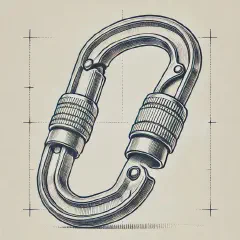
- at night and in waves, clip your harness with a snap hook to the jackline;
- hold on: one hand for yourself, one for the ship;
- don’t urinate over the side – it’s one of the classic causes of falls overboard.

Terms in this guide
Read next

First steps on board: 20 terms to know from day one
Essential nautical terms for your first sail: directions on board, parts of the boat, deck equipment and the orders you'll hear from the skipper – with their Romanian equivalents.
Read
Anatomy of a sailing boat: hull, mast and sails
The parts of a sailing boat explained simply: bow, stern, hull, keel, mast, stays, mainsail, jib, and the three edges and three corners of a sail – with their Romanian names.
Read
IALA buoyage explained: how to read buoys at sea
IALA Region A buoyage guide: lateral, cardinal, isolated danger, safe water and special marks – colours, shapes, topmarks and lights.
ReadNAUTI
Romanian–English nautical dictionary and boating licence practice
Illustrated nautical terms with definitions and pronunciation in Romanian and English, plus mock exams, lessons and drills for the Romanian boating licence. No account, no ads, offline.